


A woman’s gaming monitor dies. She picks up her phone, activates her phone and utility bills in an app, and watches her credit score climb as the screen turns green. The ad ends with her walking in carrying a new monitor, chair, speakers and lights.
That Credit Karma spot scored 21 points above the norm on CTV and came in fourth on September’s Top Ads list. It also shows a common pattern behind the month’s top performers.
The best ads this month showed the mechanism, then showed the next tap. They opened on a friction the viewer already owns, and they tied the brand to a specific moment.
Show the mechanism
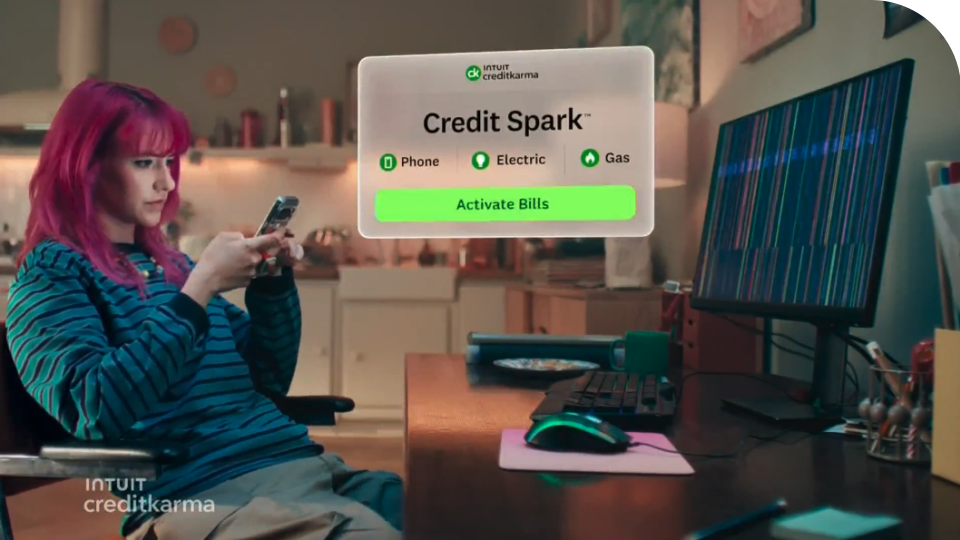
Marketers have known for a long time that abstract benefits are hard to sell. A credit score is a number on a screen, and its payoff is years away. But people do respond to outcomes they can picture soon, which is why so many ads swap the abstract benefit for something tangible, like a new monitor and chair.
Fixodent drew its benefit. An illustration showed the adhesive sealing gaps against food, followed by a with-and-without comparison of irritated gums and a clean seal. The ad scored 15 points above the norm on Linear. Apple Watch showed the “low cardio fitness” alert and then the person responding to it, jumping in a pool and running, for 12 points on Linear. Chewy, the top Linear ad at 24 points, showed the order notification, the box arriving and a cat eating from a china dish.
Each ad answers “how does this work” by letting the viewer watch it work. People are more likely to believe what they see happen.
Open on a friction the viewer already owns
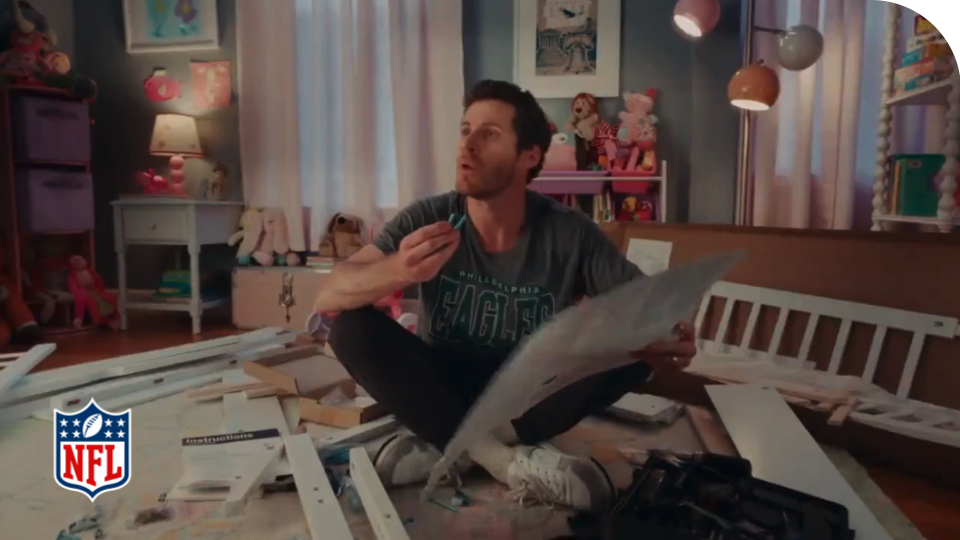
NFL+ opened on a dad stuck assembling furniture while the game plays elsewhere in the house. Domino’s opened on “you want your thing, and I want my thing,” a group-ordering problem anyone who has split a pizza order will recognize. Credit Karma started with the dead monitor, and Fixodent with a man who had fallen into eating alone after getting dentures.
Each ad named a problem first, and the product arrived as the resolution. That gives the viewer a personal stake in the opening seconds, before any claim is made. The pattern extends what we saw in August, when the top ads showed people something they already recognized as true. You can read that analysis in last month’s post.
Tie the brand to a named moment
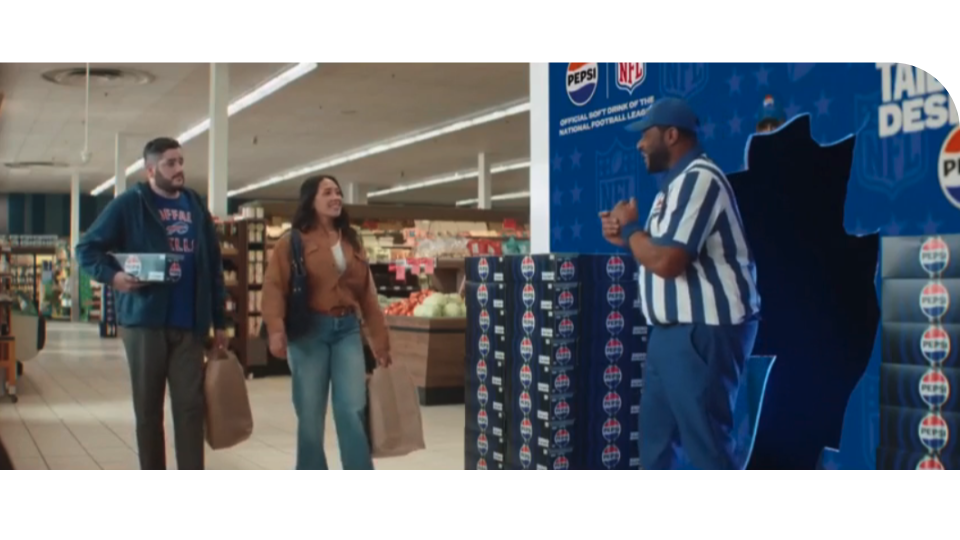
Pepsi’s top CTV ad, at 43 points above the norm, put a referee through a grocery display to call “false start” on hot dogs without Pepsi. A tailgate gave the brand a specific buying situation, and the display sat in the first frame so the joke and the brand landed together. It led the CTV board by 11 points.
Amazon’s Spanish :15 for Prime Big Deal Days scored 30 points above the norm with no dialogue. The October 6-7 dates appeared in the opening seconds and again at the end, a firm deadline that does more work than “limited time.” Arby’s pitched Steak Nuggets as the thing to eat on game day, and the ad scored 15 points above the norm on Linear.
One caution on this habit: about seven ads across the two lists share football or fall cues, so the season may be lifting the whole board. We can’t separate the calendar from the creative. What the top ads share is specificity, a tailgate with hot dogs, a two-day window with dates on screen, game day with steak nuggets. A generic occasion gives a brand a fragile connection, with no situation to own.
Three questions for your next rough cut
Before the next creative review, put these to the cut:
- Could a viewer repeat the action after watching once?
- Does the opening name a problem your target viewer has?
- Does the ad tie the brand to a moment with a date, a setting or a situation?
These are the kinds of questions MarketCast Advertising Solutions are built to answer.
See every September ad ranked, with CTV and Linear scores for each, on the full top ads leaderboard.
Sign up for the MarketCast newsletter
Get the top ads delivered to your inbox each month.