


MarketCast Brand Effect measures the advertising effectiveness of thousands of ads running across CTV and Linear. This past month, we scored more than 7,000 to rank the top performers. These leaders are across different categories with different budgets, creative approaches, and ad lengths. But when you look across all of them for what separated them from the rest of the pack, one pattern kept surfacing.
The best ads this month showed people something they already felt to be true. See the full list of August’s top breakthrough ads.
Why Persuasion Is the Wrong Frame for Modern Creative
The standard model of advertising effectiveness goes something like this: you have a message, you deliver it compellingly, the viewer updates their beliefs, and eventually that belief change drives behavior. Persuasion as a transaction. Information in, attitude change out.
That model is not wrong exactly. But it describes almost none of the ads that topped our leaderboard this August.

Dick’s Sporting Goods ran an ad, “Welcome to Sporthood,” that scored 12 points above norm on CTV. It showed kids playing indoor soccer with a laundry basket tipped on its side as the goal and siblings negotiating the rules. Simple details like a dog bed in the corner and laundry that was supposed to be folded set the scene. The text “Someday you’ll miss this” appears just before the retailer’s logo, after the emotional experience is already complete.
Nothing in that ad is persuading you of anything about Dick’s Sporting Goods. Instead you see the chaotic but temporary reality of childhood sport played in living rooms. It’s something parents already understand, the brand is simply present when the recognition occurs.
Recognition Is Faster, Deeper, and Harder to Resist
When an ad shows you something you’ve lived, felt, or witnessed, your brain processes it as confirmation of something already known, which matters for how the message gets encoded.
This is why the most emotionally resonant ads this month share a creative discipline that looks, on the surface, like the opposite of broad appeal: they get more specific, not more generic. We see a laundry basket tipped on its side, a wife whispering in the dark bedroom because her husband with sleep apnea is actually sleeping, and Carol hauling a wheelbarrow around the garden, pain-free.
The brands could have softened every one of those details into a more universal experience, but that would not have worked as well, because generic scenes don’t trigger recognition. They look like everything else. There’s a meaningful difference between that looks familiar and that’s my house.
Great Ad Creative Connects with Culture
The best ads this month are finding culture that already exists and standing next to it.

Starbucks used the decades of cultural significance behind PSL season with their August ad, which scored 13 points above norm on Linear. Social media videos, the calendar flipping through summer months, the Family Guy clip with Lois’s PSL obsession confirms a feeling that already exists and attaches the brand.
Taco Bell did the same thing, but with a different era. Their “Decades: 2016,” pulling from the recent viral trend, looks like real social media posts from real people who loved Taco Bell in 2016, complete with lo-fi video, hand-drawn graphic overlays, and like counts climbing. The target audience was roughly 8 to 18 years old ten years ago, which places that year squarely within the period when personal memories are most vivid and emotionally significant. Taco Bell found an audience already swimming in nostalgia and handed them a menu item to swim toward.
Chick-fil-A also dialed into decade nostalgia with their Chicken and Waffles ad and its 90s sitcom title card—”Chick-fil-A Presents.” It activated the warm, familiar emotional register most viewers have encoded from decades of television. They successfully borrowed warmth, redirected it toward a new comfort food, and attached cultural equity.
No one can build in 30 seconds what culture built over 30 years. The ads that understand this build their creative around two questions: where does the feeling already live, and how do we stand next to it?
Why Creative Sequencing Matters as Much as Emotional Resonance
Across almost every top performer this month, the emotional experience precedes the product information. Dick’s makes you well up before the logo appears. Progressive makes you laugh for 25 seconds before “America’s number one auto insurer” lands. Aleve shows you Carol jogging in the dark before stating the 12-hour claim.
That sequencing is purposeful. When a viewer receives a rational claim while they’re in a positive emotional state, they counter-argue it less. The emotional experience lowers the defenses that would otherwise activate around a product claim.
Through rigorous ad testing and campaign measurement, we regularly observe that ads struggling to gain traction tend to invert this sequence. They lead with the offer or the product and then try to generate feeling around it. That isn’t always the case, however. QuickBooks, the number one performer on CTV this month, demonstrates what happens when a strong offer is successful: 90% off for three months is an extraordinary promotional mechanic, and it sits persistently in the corner of the screen for nearly the entire runtime. The ad may not connect emotionally, but it scores 17 points above norm because the offer is exceptional and the targeting is precise. When the first two variables are strong enough, the third matters less.
How Recognition Shifts the Creative Briefing Process
If you accept that the goal is recognition rather than persuasion, the briefing question changes.
The standard brief asks: what do we want people to believe about our product? That’s a persuasion brief. It produces ads that lead with claims and try to generate feeling around them.
The recognition brief asks something different: what does our target audience already know to be true that our product is relevant to? What experience do they already own that we can show them?
- For Dick’s, the answer was: parents already know what it feels like to watch their kids invent sport in the living room, and they already know, somewhere in the back of their minds, that this won’t last forever.
- For Inspire, the answer was: the partner of someone with sleep apnea already knows exactly what it feels like to lie in the dark, sleepless, next to someone who doesn’t know there’s a problem to solve.
- For Chewy, the answer was: anyone who has moved with pets, introduced a new animal, or prepared for a new baby already knows the specific texture of that anxiety, and they already know their pet is at the center of all of it.
Each of those briefs started with the truth the viewer already holds. The product entered as the answer to a question the viewer is already asking.
Real-World Examples: Ads That Tapped Into Lived Truths
“Emotional advertising” is a broad category, so it’s worthwhile to dive into specific examples.
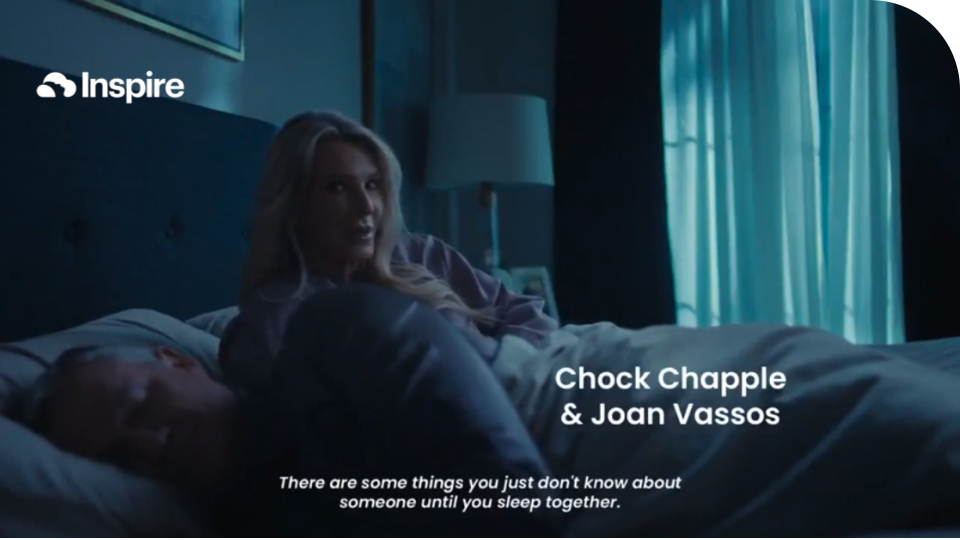
Joan, in the Inspire Medical Systems ad, whispers in a dark bedroom. Her husband Chuck is sleeping. She’s talking about his snoring and the device that stopped it. The whisper is intimate and the dark room is real. The humor in Joan’s acknowledgement of her double entendre is the self-awareness of a woman who knows exactly how she sounds and says it anyway. It represents trimmings of domestic experience that a specific audience recognizes immediately as their own.
The Chewy ad follows a family through a move, a new cat, and a pregnancy, with their dog at the center, head tilting as the world tilts with it. When the pregnant woman is revealed near the end and the husband says “we got this,” the emotional weight behind those three words belongs to everyone who has ever stood in the middle of overlapping life change and tried to hold it all together.
In every case, the ad isn’t arguing for anything. It’s showing a viewer something they recognize as true and the brand is present when that recognition happens.
Recognition Is an Advertising Strategy, Not Just a Feeling
The easiest misreading of this pattern is to conclude that it’s an argument for emotional advertising over rational advertising. It isn’t.
It’s an argument for emotional advertising that is earned by knowing who is watching your ad and what moves them. And it’s an argument that the most effective ads this month aren’t doing something to the viewer. They’re finding something in the viewer that was already there.
That distinction changes how you evaluate creative before it runs. The question isn’t: will this make people feel something? It’s: will people recognize this as true?
Those questions produce very different answers and, based on our ongoing advertising effectiveness research for our clients, very different results on the screen.
See the Full Leaderboard
MarketCast measures advertising effectiveness across CTV and Linear, scoring thousands of ads each month against normed benchmarks. The August leaderboard reflects performance across more than 7,000 ads analyzed during the month. View it now.
Sign up for the MarketCast newsletter
Get the top ads delivered to your inbox each month.